
What We Do
Connecting people
We engage with all specialisms involved in the oversight, management, and use of patient-centred data, creating opportunities to coalesce, build relationships, and collaborate more effectively to access and utilise high-quality, large-scale datasets.
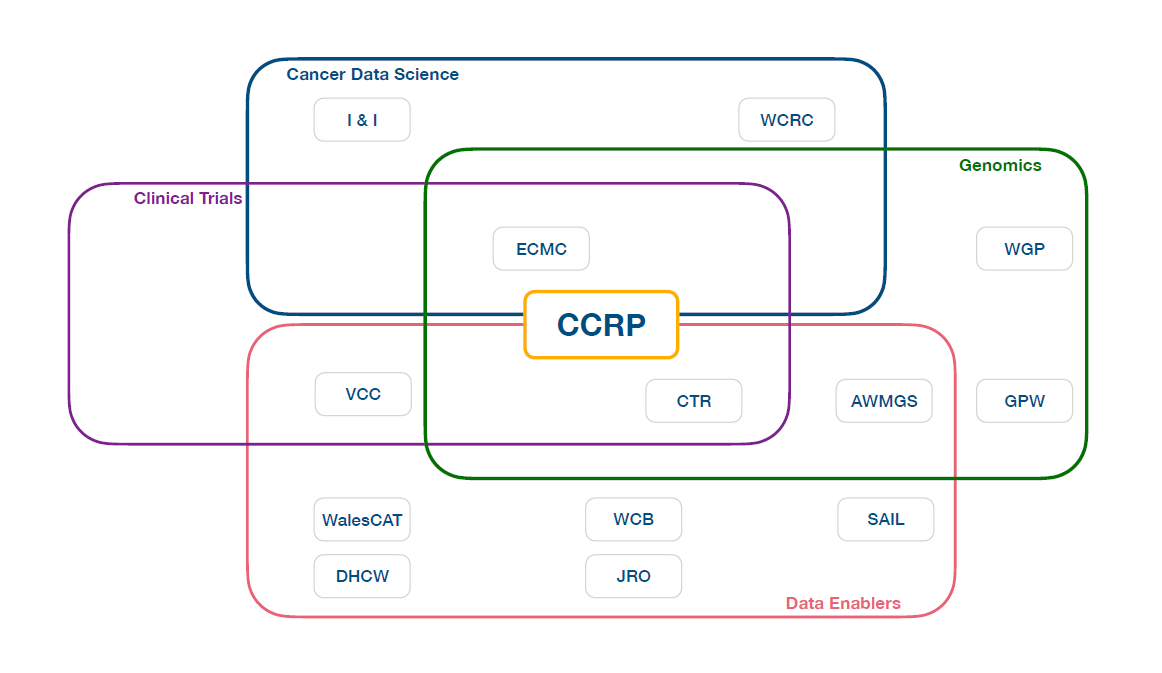
Synergising activity with other research units
We work to strengthen collaboration and engagement across different business units, demonstrating how data challenges are crosscutting through traditional institutional and disease-specific boundaries throughout the research lifecycle. Our community drives increased participation in joint initiatives, enabling faster decision-making, reduced duplication of effort, and improved outcomes on shared projects.
Problem solving and co-creation
The CCRP embeds a culture of joint problem-solving and co-creation, rather than forcing novel challenges into existing processes and structures. Our use of cross-function workshops and innovation sprints enables teams to tackle challenges from multiple perspectives and share their understandings.
Making Maximal Use of Cancer Data
What types of data do CCRP partners generate?
All CCRP partners generate large volumes of patient-centric data through their activities, which are used to improve the treatment and experience of cancer patients. These include healthcare, histopathology, genomic, and medical imaging data generated during the diagnostic journey. Additional data includes information about treatments received and, for some patients, their views on outcomes and experiences (captured through PROMs and PREMs).
Patients also donate biological samples, making these invaluable resources available to clinical trials and laboratory researchers. This enables the generation of novel and experimental data that can further improve understanding, treatment strategies, and ultimately patient outcomes.
Making Full Use of Our Cancer Datasets
Beyond their primary purpose (e.g. healthcare, research, or clinical trials), cancer datasets have many secondary uses that extend well beyond their original intent. To increase efficiency and reduce costs, trials such as QuicDNA are incorporating routinely collected healthcare data into their design, made available to researchers via secure data environments. The CCRP partnership will enhance and accelerate opportunities to use all available data in innovative ways—combining and linking information to enable mechanistic insights, treatment improvements, and better outcomes for all patients.