

Skip to content

ATTEST – First patient recruited in clinical trial using cancer-targeting virus

The first patient has been treated in a clinical trial that is testing a pioneering virus technology – which originated at Cardiff University – that infects cancer cells, producing an anti-tumour drug from inside the tumour cells.

Accession Therapeutics’ ATTEST trial is a first-in-human Phase 1 trial in solid tumour patients, testing TROCEPT-01 (also known as ATTR-01). The trial is being delivered by Velindre University NHS Trust and Cardiff and Vale University Health Board.

The ATTEST trial is recruiting into leading UK clinical sites – including Cardiff – with plans to extend to Spain. Professor Adel Samson at Leeds University Hospital is the Chief Investigator of the study.

Delivery of the trial in Cardiff is being aided by the Cardiff Cancer Research Partnership – a collaboration which aims to improve and coordinate cancer research in Wales, increase patient access to new clinical trials, and accelerate the development of new treatments. The technology behind TROCEPT-01 was originally developed by scientists in Professor Alan Parker’s lab at Cardiff University, before being licensed out to Accession Therapeutics Ltd in 2021. Accession has since progressed the programme through development and into the clinic.  TROCEPT-01 uses a viral-based approach, precisely engineered to spare healthy tissue and only target the tumour and metastatic lesions.

The new therapy provides a dual-therapeutic effect, by first recognising and infecting only cancer cells, making more copies of itself, causing the infected cancer cells to burst. Secondly, the virus delivers a gene into cancer cells that encodes for a checkpoint inhibitor – a form of immunotherapy that blocks proteins on immune cells. This turns the cancer cells into factories producing the anti-tumour drug and triggering a powerful and precise immune response to act on the tumour.
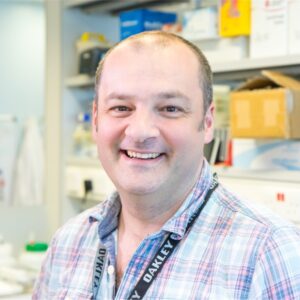
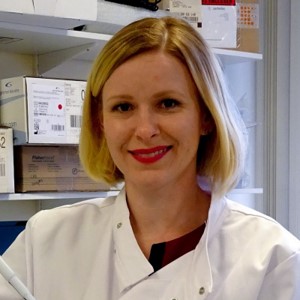
Professor Alan Parker, Professor of Translational Virology at Cardiff University and Chief Scientific Officer with Accession Therapeutics, said: “It’s wonderful to see an invention made at Cardiff University progress into a clinical trial and for one of these sites to be in Cardiff.

“TROCEPT-01 has been designed to have minimal activity in healthy tissues, with maximal activity in the tumour. This potent and highly localised activity gives promise in many cancers of unmet clinical needs, and the ATTEST trial includes hard-to-treat cancers such as pancreatic, lung, bladder, head and neck, endometrial and cholangiocarcinomas.”

Dr Magda Meissner, Velindre Cancer Service and a Principal Investigator of the ATTEST trial at the Cardiff site, said: “Being part of the ATTEST trial marks an exciting milestone for our team and for cancer research in Wales. This study brings together academic innovation and clinical expertise as we test the delivery of a new class of precision oncolytic therapy directly to patients. We are proud that Cardiff is involved in these first in-human trials and helping to translate years of laboratory research into potential new treatment options for people with advanced cancers.”

Claire Lang, Senior Research Nurse Manager, Cardiff Cancer Research Partnership, said: “I will be working with the patients in the Cardiff site, to administer the treatment. This is a fantastic example of ‘bench to bedside’ cancer research in Wales – developing research from Cardiff University laboratories into a new class of drug, and delivering it to NHS patients for the first time at UHW and Velindre via this trial.”

David Fluck, Executive Medical Director at Cardiff and Vale University Health Board, said: “Research gives an opportunity to discover new treatments and positively impact the lives of people in Cardiff, Wales, and across the world.

“It’s exciting to see my colleagues making such an impact and I look forward to hearing more about this trial, and other projects taking place in at the Cardiff Cancer Research Partnership, and across our Health Board area. I’m grateful to Velindre and Cardiff University for supporting us with this important work.”

Bent Jakobsen, CEO of Accession Therapeutics, said: “Dosing the first patient in our TROCEPT-01 clinical trial has been a pivotal moment for Accession Therapeutics and a testament to the dedication of our team and collaborators. In TROCEPT, we have created a unique, highly versatile platform that enables novel drugs to be made inside cancer cells. The platform gives us multiple opportunities to generate valuable products to transform outcomes for cancer patients. TROCEPT-01 (ATTR-01) has the potential to expand the indications where checkpoint inhibitors have been successful.”

The Cardiff Cancer Research Partnership is a priority of the newly-launched Cardiff Health Partners - a collaboration between Cardiff University, Cardiff and Vale University Health Board and Velindre University NHS Trust to align discovery science, healthcare, education, and industry partnerships to accelerate innovation into practice, improve health and equity, and drive inclusive economic growth and regeneration.

For more information about taking part in clinical trials, patients should first consult their health care professional. Patients are not able to self-refer onto the ATTEST trial and none of the sites/companies/individuals named above are able to take individual inquiries or referrals.

Notes to Editor
1. All media enquiries relating to the ATTEST trial should be sent directly to Accession Therapeutics to comms@accessiontherapeutics.com
2. Accession Therapeutics’ ATTEST trial site in Wales has been set up in close collaboration with the following organisations:
• Velindre University NHS Trust – Velindre has worked with Cardiff and Vale UHB to set up this study and will be running the study.
• Cardiff and Vale UHB – The Research Delivery Team (CRF) at CAVUHB are working with CCRP nurses to deliver the treatment and the patient will receive treatment in their Clinical Research Facility.
• Cardiff University – The discovery was made and developed by scientists in Professor Parker’s lab at Cardiff University. Professor Alan Parker’s research was funded by Cancer Research Wales and Cancer Research UK.
• The Cardiff Experimental Cancer Medicine Centre (ECMC) played a central role in orchestrating trial delivery.
• Wales Cancer Research Centre (WCRC) has co-funded Clinical Research Fellows to help deliver the trial.
3. Cardiff Cancer Research Partnership (CCRP) is a partnership between Velindre University NHS Trust, Cardiff and Vale University Health Board and Cardiff University.
4. Velindre Cancer Charity funds the CCRP Clinical Delivery team that has set up and is delivering the Cardiff-based trial.
5. For more information contact:
Alice Gray/Victoria Dando
Communications and Marketing
Cardiff University
DandoV2@cardiff.ac.uk / GrayA8@cardiff.ac.uk
6. About Cardiff University
Cardiff University is recognised in independent government assessments as one of Britain’s leading teaching and research universities and is a member of the Russell Group of the UK’s most research-intensive universities. The 2021 Research Excellence Framework found 90% of the University’s research to be world-leading or internationally excellent. Among its academic staff are two Nobel Laureates, including the winner of the 2007 Nobel Prize for Medicine, Professor Sir Martin Evans. Founded by Royal Charter in 1883, today the University combines impressive modern facilities and a dynamic approach to teaching and research. The University’s breadth of expertise encompasses: the College of Arts, Humanities and Social Sciences; the College of Biomedical and Life Sciences; and the College of Physical Sciences and Engineering. Its University institutes bring together academics from a range of disciplines to tackle some of the challenges facing society, the economy, and the environment. More at  www.cardiff.ac.uk